
Understanding TMT Global and Outdoor Cat6 Cable
Introduction to TMT Global
TMT Global is recognized as a premier provider of telecommunications and networking solutions, dedicated to delivering high-quality products designed to meet both residential and commercial needs. Established with the vision of revolutionizing communication infrastructure, TMT Global has consistently positioned itself at the forefront of the industry by offering innovative solutions that enhance connectivity and operational efficiency.
The company’s extensive product range includes cutting-edge outdoor Cat6 cables, which are engineered to provide superior performance even in challenging weather conditions. These cables are designed with specific attention to durability and reliability, ensuring long-lasting connections for various applications. TMT Global’s commitment to exploiting the latest advancements in technology allows them to develop products that guarantee high-speed data transfer and an uninterrupted internet experience.
Understanding the diverse requirements of their clientele, TMT Global caters to both small-scale residential users and large-scale commercial enterprises. Their networking solutions are tailored to support a wide array of applications, from simple home networking setups to complex business infrastructures that demand robust performance and security. This dual focus not only enhances their product offerings but also exemplifies their versatility as a leader in the telecommunications market.
Moreover, TMT Global’s emphasis on customer satisfaction is evident in their support services and product warranties, reinforcing their dedication to fostering long-term partnerships with clients. By prioritizing quality and innovation, TMT Global continues to set industry standards, ensuring that both residents and businesses enjoy exceptional networking solutions tailored to meet their unique needs.
What is Cat6 Cable?
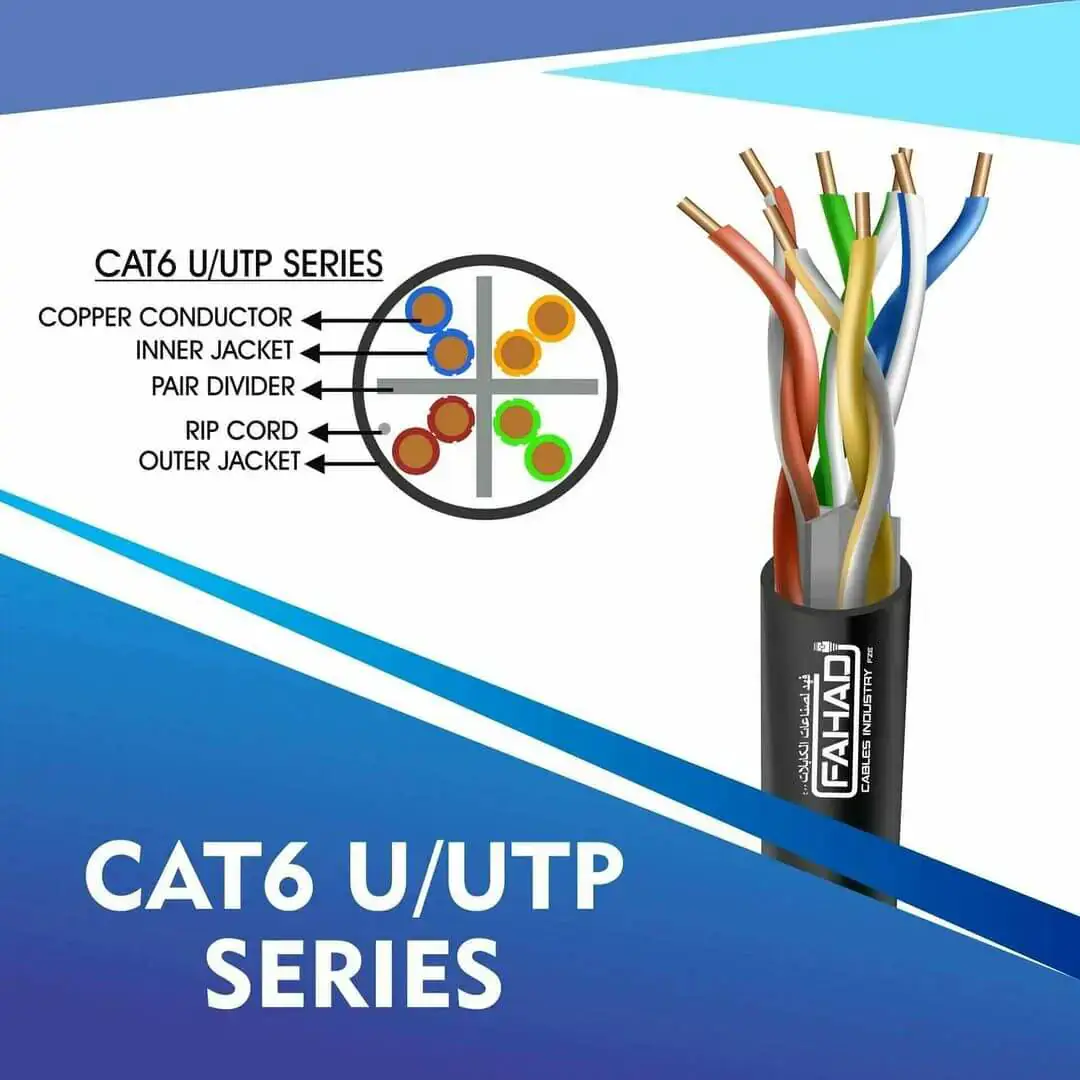
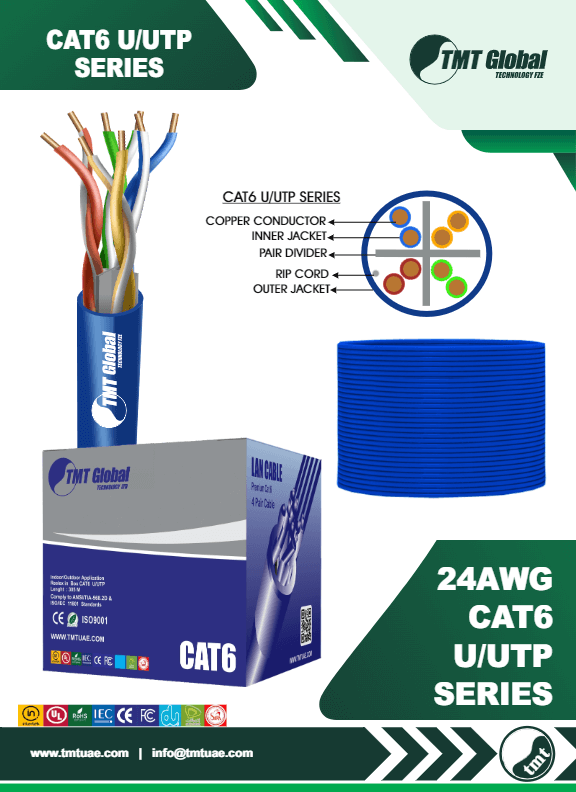
Category 6 (Cat6) cable is a standardized twisted pair cable that is commonly used in Ethernet networks and offers significant advantages for high-speed data transmission. Designed for superior performance in data communications, Cat6 cables are particularly noted for their speed and bandwidth capabilities. They are often utilized for both residential and commercial networking environments to support various applications.
One of the most remarkable specifications of Cat6 cables is their ability to support data rates of up to 10 Gbps over a distance of 55 meters. At shorter distances, specifically up to 37 meters, Cat6 cables can maintain these high speeds more effectively. This capability makes them suitable for demanding tasks such as video conferencing, high-definition streaming, and large file transfers.
In terms of bandwidth, Cat6 cables boast a frequency range of up to 250 MHz, which is a significant improvement over their predecessor, Cat5e cables that have a maximum bandwidth of 100 MHz. This higher bandwidth contributes to reduced crosstalk and interference, thus enhancing overall network performance. The cables are constructed with heavier shielding and tighter twists, which further minimize electromagnetic interference (EMI), making them ideal for environments with potential outside interference.
Moreover, Cat6 cables are backwards compatible with earlier cable standards, such as Cat5 and Cat5e, allowing for a seamless upgrade without needing to replace existing infrastructure. With a strong focus on reliability and efficiency, Cat6 cables are suitable for a wide range of multimedia applications, thereby positioning themselves as a crucial component in modern cable networking systems.

The Importance of Outdoor Rated Cat6 Cable
Outdoor rated Cat6 cables are specifically engineered to meet the demanding conditions associated with outdoor installations. One of the primary advantages of these cables is their ability to resist environmental factors that can compromise standard indoor cables. For instance, outdoor rated Cat6 cables are designed to withstand moisture, preventing water damage that can lead to signal degradation or complete failure of the cable. This is particularly crucial in regions prone to heavy rainfall or humidity where indoor installations may be insufficient.
Moreover, outdoor rated Cat6 cables are insulated with materials that provide robust ultraviolet (UV) resistance. Cables exposed to direct sunlight for extended periods can suffer from deteriorating plastic that impacts their performance. Thus, selecting a cable that can endure UV rays helps ensure longevity and reliable connectivity in an outdoor environment. In addition, these cables often come with a rugged protective covering that guards against abrasions, rodents, and other physical damages, further enhancing their overall durability.
Another important consideration is the cable’s ability to maintain consistent performance across longer distances. Outdoor rated Cat6 cables are optimized for data transmission over distances up to 328 feet (100 meters), making them suitable for various applications, including connecting buildings, running networking lines to outdoor devices, or extending Wi-Fi coverage to gardens and patios. Utilizing the right infrastructure is vital for achieving optimal signal quality, and outdoor rated options help facilitate this.
Using outdoor rated Cat6 cables ultimately leads to more reliable network performance, ensuring you stay connected even in adverse conditions. Their construction standards, designed for resilience against environmental stressors, make them an essential choice for any outdoor networking project.
Types of Outdoor Cat6 Cables
Outdoor Cat6 cables are designed to withstand challenging environmental conditions while providing reliable network connectivity. Various types of these cables serve different applications based on their construction and durability. Two notable types of outdoor Cat6 cables are direct burial cables and armored cables, each fulfilling specific requirements in outdoor installations.
Direct burial Cat6 cables are engineered for underground installation. They are covered with a rugged UV-resistant jacket that safeguards the inner conductors from moisture, soil contaminants, and temperature fluctuations. This cable type is ideal for connecting network systems laid directly in the ground, such as between outdoor data hubs or between buildings. The key advantage of direct burial cables is that they eliminate the need for additional conduits, simplifying the installation process and reducing costs.
Armored outdoor Cat6 cables, on the other hand, feature an additional layer of protection, usually metallic, which shields the cable from physical damage caused by rodents, impacts, or even thermal variations. This type of cable is particularly useful in environments where there is a significant risk of abrasion or crushing. Armored cables provide peace of mind when installed in high-traffic areas or when subjected to harsh conditions, ensuring uninterrupted data transmission.
Moreover, both direct burial and armored outdoor Cat6 cables are suitable for Power over Ethernet (PoE) applications, making them versatile solutions for numerous outdoor networking tasks. When selecting between these types of cables, considerations such as installation location, environmental factors, and potential hazards should be taken into account to ensure optimal performance and longevity.
Installing Outdoor Cat6 Cable: Best Practices
When installing outdoor Cat6 cables, adhering to best practices is crucial to ensure longevity and optimal performance. These cables are designed to withstand environmental factors; however, proper installation will significantly enhance their durability. First, it is essential to choose the correct installation method. One of the most effective approaches is trenching, where a trench is dug to place the cable below the ground surface. The depth of the trench should ideally be around 18 to 24 inches to protect the cable from external disturbances, such as animal burrowing or surface debris.
Before initiating the trenching, check local building codes and utility lines to avoid any legal or logistical issues. It is wise to consult a professional if you are unfamiliar with these regulations. Additionally, using a conduit can provide extra protection against moisture and physical damage. PVC or other waterproof conduits are highly recommended as they offer an effective shield against the elements, such as rain and extreme temperatures.
While laying the cable in the trench, avoid sharp bends to ensure signal integrity; maintaining a minimum bend radius is crucial to prevent performance degradation. Moreover, it is advisable not to overtighten the cable during installation, as this could lead to internal damage.
Connection tips also play a vital role in optimizing your outdoor Cat6 cable performance. Utilizing weatherproof connectors is recommended; these connectors are designed to withstand harsh weather conditions and contribute to reducing signal loss. Furthermore, sealing the entry points with silicone sealant or similar materials can effectively prevent moisture ingress, which is essential for maintaining the performance of the network.
Implementing these best practices when installing outdoor Cat6 cables will not only ensure the longevity of the cables but also enhance overall network performance, providing reliable connectivity for outdoor applications.
Benefits of Using Armoured Cat6 Cable
Armoured Cat6 cables are engineered specifically for outdoor environments, providing a robust solution for network connectivity. One of the primary advantages of these cables is their enhanced durability. The armoured layer, typically made of steel or a similar resilient material, protects against various physical impacts that can occur in outdoor settings. Whether it is from accidental trampling, falling branches, or the movement of heavy equipment, the armoured shell significantly reduces the risk of damage to the internal wiring.
Another notable benefit is the protection against rodent damage. Outdoor areas are often plagued by wildlife, including rodents that may chew through regular cables, leading to costly repairs and loss of connectivity. Armoured Cat6 cables are designed to withstand such challenges, as their protective layer acts as a barrier against these pests, ensuring a longer lifespan of the cable.
Furthermore, armoured Cat6 cables offer superior performance in terms of data transmission over longer distances compared to their unarmoured counterparts. This is crucial for outdoor applications where signaling integrity can be compromised by environmental factors. The construction of armoured cables provides better shielding against electromagnetic interference (EMI) and radiofrequency interference (RFI), resulting in clearer signal quality for high-speed internet.
In addition to these physical protections and performance enhancements, armoured Cat6 cables also comply with industry standards, which maintains their reliability and safety in various installations. Their weather-resistant properties make them suitable for harsh climates, ensuring that they can function optimally regardless of external conditions.
Overall, opting for armoured Cat6 cables for outdoor applications offers numerous advantages, including increased durability, protection against wildlife, and maintained data integrity, making them an ideal choice for secure and efficient network solutions.
Comparing Cat6 to Other Ethernet Cable Types
When evaluating Ethernet cables, it is essential to understand the performance differences between the various categories available. Among these, Category 6 (Cat6) stands out as a widely used standard, particularly in environments that demand high-speed connectivity. In comparison to its predecessor, Category 5e (Cat5e), Cat6 cables offer significantly improved performance. While Cat5e supports speeds up to 1 Gbps over distances up to 100 meters, Cat6 can handle data rates up to 10 Gbps within shorter distances of approximately 55 meters, making it preferable for high-bandwidth applications.
Furthermore, Cat6 cables are designed with enhanced shielding that minimizes interference, allowing for better data integrity, especially in environments with multiple networking devices. This characteristic makes Cat6 an excellent choice for offices and data centers where performance reliability is crucial.
In contrast, Category 7 (Cat7) cables represent the latest evolution in Ethernet technology, allowing for even higher data transmission sizes and reduced crosstalk. Cat7 supports speeds of up to 10 Gbps over longer distances of 100 meters, with improved shielding technologies such as S/FTP (Shielded Foiled Twisted Pair) that significantly reduce interference. However, the increase in performance comes with added costs and installation complexities.
Choosing between these cable types ultimately depends on the specific needs of your network. For standard home use, Cat5e may suffice, but for modern applications requiring higher speeds and bandwidth, Cat6 is often recommended. For enterprises that anticipate growth in bandwidth demands, investing in Cat7 might be prudent despite its higher cost. Ultimately, understanding the capabilities of each cable type allows for more informed decisions based on both performance requirements and budget considerations.
Troubleshooting Outdoor Cat6 Cable Issues
Outdoor Cat6 cables are highly effective for high-speed networking, but they may encounter connectivity issues over time. Identifying and resolving these problems is essential for maintaining network performance. Here are some common troubleshooting techniques and tips to assist you in achieving a reliable connection.
First, inspect the physical condition of the cable. Outdoor Cat6 cables are designed to withstand harsh environmental conditions, yet they can still suffer from damage caused by pests, extreme temperatures, or harsh weather. Check for any visible cuts, kinks, or abrasions on the cable’s outer jacket. Damaged sections may compromise the cable’s shielding, leading to signal loss. If physical damage is evident, consider replacing the affected length of the cable.
Next, verify the connections at both ends of the Cat6 cable. Loose or corroded connectors can lead to intermittent connectivity and poor performance. Ensure that the connectors are securely plugged in and that there is no corrosion present. A quick disconnection and reconnection of the plugs can sometimes resolve minor connection issues.
Testing the cable using a cable tester is another effective method. This device can identify faults in the wiring and ensure that the proper signals are being transmitted. A good cable tester will help confirm that each wire within the Cat6 cable is functioning correctly, thereby ensuring that connectivity issues are not due to internal wiring faults.
Lastly, check the network equipment to ensure that it is functioning correctly. Problems can sometimes stem from switches, routers, or network interface cards rather than the cable itself. Rebooting these devices can often resolve connectivity issues.
By utilizing these troubleshooting techniques, outdoor Cat6 cable issues can be effectively identified and resolved, ensuring consistent performance and reliability in your networking setup.
Conclusion: Choosing the Right Outdoor Cat6 Solution
As we conclude our discussion on TMT Global and Outdoor Cat6 cables, it is essential to highlight the crucial factors that should guide your selection. When considering outdoor Cat6 solutions, one must evaluate the specific environmental conditions the cables will be exposed to, such as moisture, temperature variations, and potential physical damage. These factors significantly influence the performance and durability of your network.
Outdoor Cat6 cables offer improved shielding and durable materials to withstand harsher weather conditions compared to standard indoor cables. The differences in construction ensure that outdoor cables maintain their performance reliability, even when strung along outdoor pathways or buried underground. It is also critical to assess the installation process related to these cables, as well as their compatibility with existing networking equipment.
Furthermore, when selecting Outdoor Cat6 cables, understanding the role of different cable jackets—such as UV-resistant and water-resistant options—can enhance your network’s longevity. Selecting cables from reputable manufacturers like TMT Global ensures you are investing in quality products designed for resilience in outdoor settings.
Ultimately, the choice of the right outdoor Cat6 solution hinges on a thoughtful assessment of your unique networking requirements, including the intended installation environment, cable specifications, and budgetary considerations. By evaluating these elements systematically, you can make a well-informed decision that effectively meets your outdoor networking needs. Emphasizing quality over cost may provide long-term benefits by reducing replacement frequency and enhancing network performance. Thus, ensure that your choice aligns with the demands of your environment and provides value for your investment.